 Member of Morris Group International
Instant Hot Water: A Homeowner’s Guide to Choosing the Perfect On-Demand Water Heater
September 18, 2024
Choosing an instant water heater, also known as a tankless or on-demand water heater, is an important decision for any homeowner.
These innovative heaters have become increasingly popular with the promise of hot water delivered instantly, lower energy bills, less wasted water and space savings.
However, selecting the right one for your home can be daunting. Whether you’re building a new home or upgrading your current water heating system, it’s essential to consider factors like fuel type, size, energy efficiency, and installation requirements. In this article, we’ll walk you through the critical considerations and provide practical tips to help you make an informed choice.
10 Considerations for Choosing the Perfect Instant Water Heater for Your Home
Installation Location
Tankless water heaters come in a variety of types. For example, you can choose a high-capacity unit that serves your entire house, or you can opt to install point-of-use tankless water heaters at the fixtures where hot water is needed.
While one unit that services your entire home may seem to make the most sense because it is a one-and-done solution, it will only provide some of the benefits of instant hot water. When you have a whole-house unit in your basement, that hot water still has to travel through the piping system to get to the appliance, meaning it could take a bit of time until you have hot water coming out of the shower on the second floor, thus lowering the overall water savings.
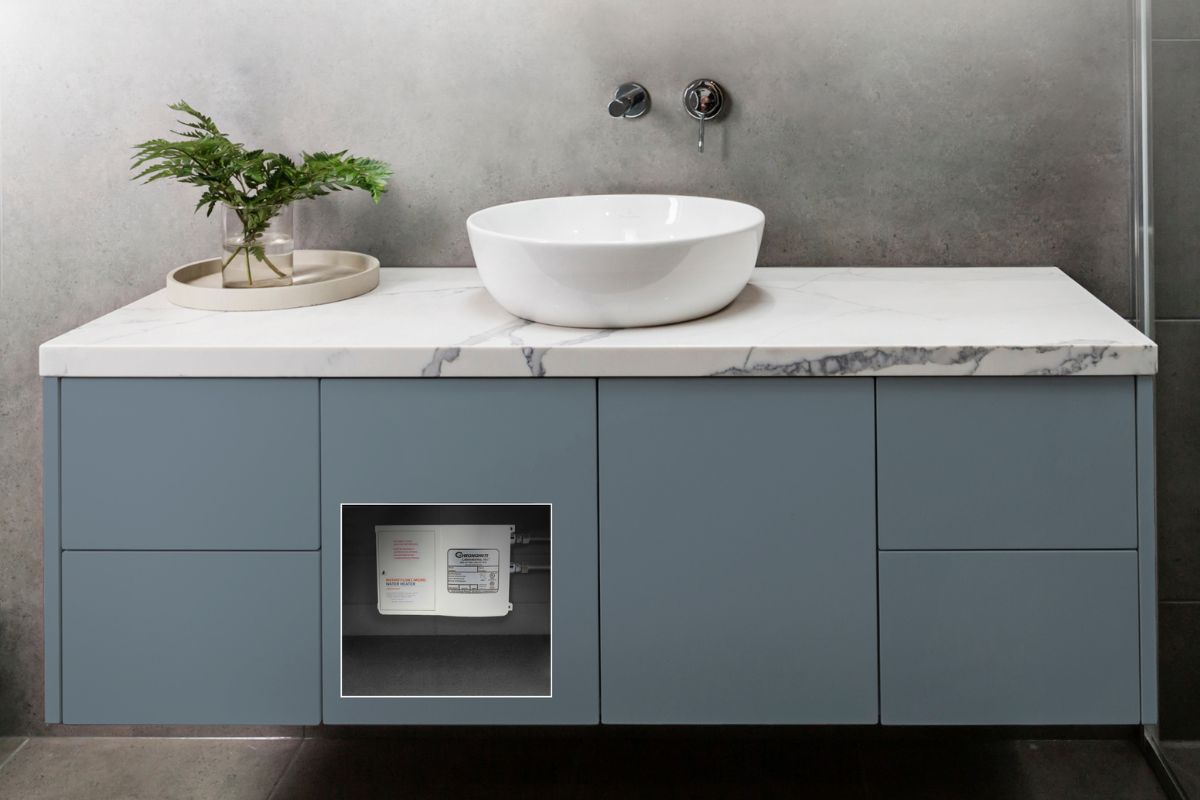
Alternatively, a point-of-use tankless water heater can be installed right under the sink in the bathroom (Chronomite point-of-use tankless water heaters are just about the size of a dictionary!), providing hot water to your sink and shower at the snap of your fingers.
Fuel Type
Instant water heaters can be powered by natural gas, propane, or electricity. Consider the availability and cost of these fuels in your area when choosing a heater.
Chronomite point-of-use tankless water heaters are powered by electricity, an environmentally friendly option as more and more power grids are switching to renewable energy. However, that doesn’t mean you can just plug them into a wall outlet. Chronomite Tankless Water Heaters are U.L. listed and require that the heater be “hardwired” to a dedicated breaker.
Size and Flow Rate
To determine the proper size of your point-of-use water heater, you need to know the flow rate of the fixtures the heater will be servicing. Flow rate is measured in gallons per minute (GPM). You could purchase a flow meter, but all you really need is a gallon jug and a stopwatch.
- Turn on the faucet.
- Using your stopwatch, time how long it takes to fill the jug.
- Divide 60 (the number of seconds in a minute) by the number of seconds it took to fill your container. (for example, if it took 20 seconds to fill the container, then 60 divided by 20 equals = 3 gallons per minute.)
The flow rate and temperature rise are crucial in sizing the heater correctly.
Energy Efficiency
Look at the heater’s energy factor (EF) rating, which measures the appliance’s energy efficiency. The higher the EF, the more efficient the heater is.
Temperature Control
Some instant water heaters allow you to adjust the temperature, which can benefit different applications (e.g., a lower temperature for hand washing and a higher temperature for dishwashing).
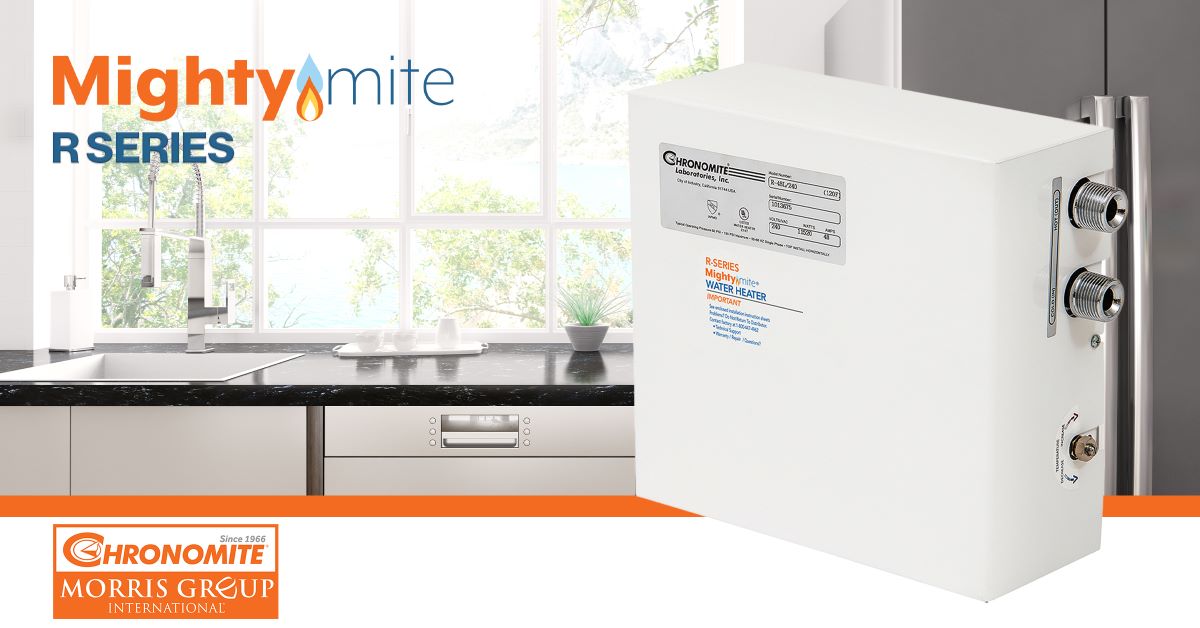
Chronomite R Series point-of-use water heaters come standard with user-adjustable temperatures of 70 – 125 degrees Fahrenheit. They also work on low flow with 0.35 gallons per minute activation.
Installation Requirements
Consider the requirements for installation, including necessary venting (for gas models), electrical requirements (for electric models), and space needed for installation. You may need to hire a professional for installation.
Chronomite R Series point-of-use water heaters run on electricity, and their compact design means you can install them wherever you need them. While a Chronomite water heater is easy to install, they do require a dedicated breaker.
Maintenance
Some models require more maintenance than others. For instance, in homes with hard water, some brands may need to be flushed regularly to remove mineral buildup.
Chronomite water heaters feature a uniquely engineered element assembly that harnesses the abrasive action of flowing water to create a self-cleaning mechanism. This innovative design effectively prevents the accumulation of alkali calcification (also known as limescale, mineral deposits, or hard water stains), enhancing the heater’s performance, longevity, and efficiency.
Cost
While tankless water heaters can be more expensive upfront than traditional tank water heaters, they can save money in the long run through energy savings. However, consider the total cost, including installation and any necessary modifications to your home.
Brand Reputation
Consider the brand’s reputation to get an idea of the reliability and performance of the heater.
Chronomite has been making electric tankless water heaters for commercial and residential use since 1966 and was the first to patent a microprocessor technology that controls the output temperature and delivers unlimited hot water without risk of scalding—in two seconds as opposed to the six seconds required by other tankless water heaters.
Greater efficiency means less water and energy use, Chronomite electric on-demand water heaters are 99 percent energy efficient, and we integrate energy and water conservation with cost savings and many features contributing to a safer environment.
Local Building Codes and Regulations
Ensure your chosen model complies with local building codes and regulations.
Chronomite electric water heaters are made in the U.S.A. and meet applicable building codes, including ADA, UL, IAPMO and UPC.
Remember, your home’s best instant water heater depends on your specific needs and circumstances. Please reach out today if you have questions or need assistance selecting the right unit.